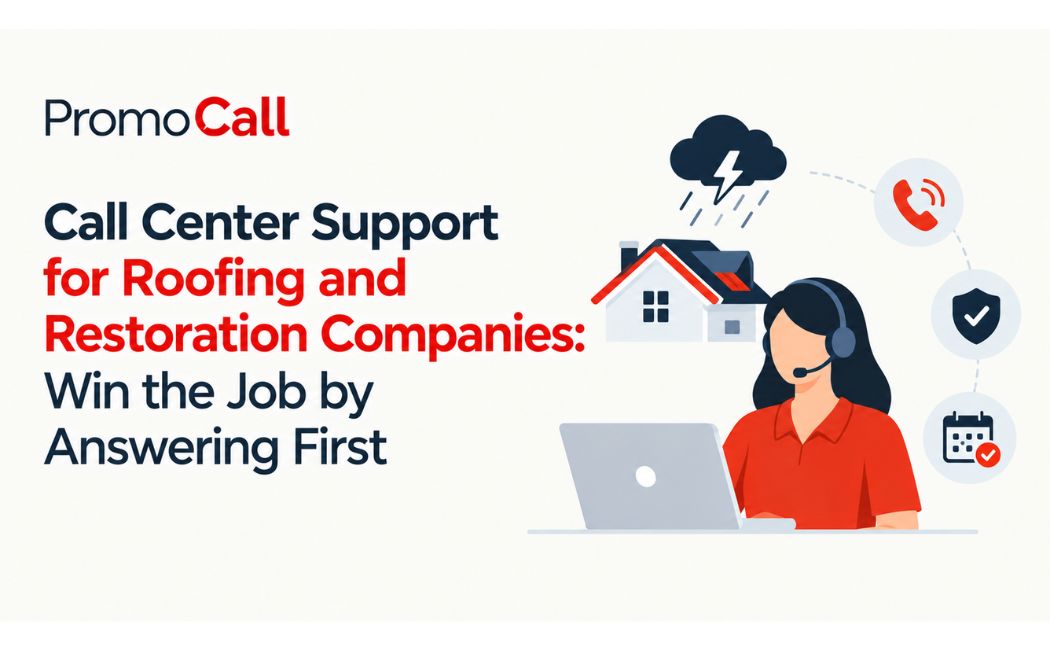
Roofing and restoration companies get their best leads at the worst times, during storms, floods, and fires, when calls arrive in waves and customers dial every company they can find until someone picks up. A dedicated call center answers every call, captures the job details, and books the inspection while your crews are out in the field.
Most home service trades have a steady flow of calls with a few peaks. Roofing and restoration are different. A hailstorm or a burst pipe can generate more calls in one day than a normal week, and each call can be worth thousands of dollars. The companies that answer first, sound organized, and offer a time usually win.
Why These Trades Lose the Most to Missed Calls
| Situation | What Happens Without Coverage | How Call Center Support Helps |
|---|---|---|
| Storm surge | Phone lines jam and callers move to the next company | Overflow answering absorbs the spike |
| After-hours emergencies | Water damage and fire calls go to voicemail | 24/7 live answering with urgency triage |
| Crews on job sites | No one in the office to take calls | Live answering while your team works |
| Insurance-related questions | Callers hang up when no one can explain next steps | Trained agents follow your intake script |
| Estimate and inspection requests | Leads cool off waiting for a callback | Inspections booked into your calendar on the first call |
What Happens on a Restoration Call
Restoration callers are often stressed, and sometimes in an unsafe situation. A good intake call is calm and consistent:
- Confirm the caller’s safety and direct anyone in immediate danger to emergency services
- Capture the address, type of loss, and what’s happening now
- Note whether insurance is involved and the carrier, if the caller knows it
- Triage urgency using your rules (active water, no power, roof open to the elements)
- Dispatch your on-call team or book the earliest inspection
Agents follow your protocol and don’t give technical or insurance advice. They collect accurate details so your estimators arrive prepared.
Roofing: Capturing Estimates After a Storm
After a hail or wind event, homeowners want a roofer fast, and they usually call several. The first company to answer and offer an inspection time often wins the job. A call center keeps you available during the surge and records each lead’s address, damage description, and preferred time, so your sales team starts the next morning with a booked schedule instead of a voicemail list.
Scaling Up and Down With the Weather
Weather-driven demand is hard to staff for. Hiring an office team sized for storm peaks means paying for idle seats most of the year. A scalable partner adds capacity when a storm hits and scales back afterward. Ask any provider how fast they can add agents and what notice they need.
Protecting Customer Information
You collect addresses, access instructions, insurance details, and payments. A partner operating under SOC2 and PCI standards helps keep that data protected. See our SOC2, PCI & HIPAA compliance overview for what to verify.
Related Reading
The same call-capture logic applies across trades. See our posts on plumbing call center support and electrical contractors, or our full Home Services industry support.
Run a plumbing, HVAC, or electrical company? See how our answering service for contractors handles emergency calls, dispatch, and booking around the clock.
Frequently Asked Questions
Can a call center handle insurance claim calls for restoration companies?
Agents can collect the details your team needs, such as the carrier, claim status, and loss description, using your script. They don’t give coverage advice.
How quickly can coverage scale during a storm?
It depends on the provider and your agreement. Ask for a written plan with notice periods and agent counts before storm season, not during it.
Will agents handle emergency calls safely?
Agents follow your emergency script, which should direct callers in danger to emergency services first and then dispatch your on-call team.
Is this worth it for a small roofing company?
Often yes. Small companies lose the most to missed calls during busy stretches, and shared coverage costs far less than staffing an office for peak volume.