Tens of millions of people in the U.S. speak Spanish at home, and many of them prefer to handle customer service in Spanish, especially when the topic is money, health or a problem with an order. If your support line only works in English, those customers wait for a callback, struggle through the call, or quietly go to a competitor that speaks their language.
This guide explains when a U.S. business needs Spanish-speaking customer support, the options for adding it, and what to look for in agents so the experience feels natural rather than translated.
Signs your business needs Spanish-language support
- Agents regularly transfer calls to the one Spanish-speaking employee
- You serve markets like California, Texas, Florida, Arizona or New York with large Spanish-speaking populations
- Customers ask for Spanish on calls, chats or review sites
- Your sales team loses leads who call and hear English-only menus
- You run Spanish-language ads but send callers to an English-only line
If two or more of these apply, you are already losing revenue to a language gap.
Three ways to add Spanish support
1. Interpreter lines
An English-speaking agent conferences in an interpreter. It works for rare calls, but it is slow, costs per minute and makes every call feel like a workaround.
2. Hiring Spanish speakers locally
This gives you control, but bilingual agents are in demand, so they cost more and are harder to keep. Covering evenings and weekends means hiring several.
3. A bilingual nearshore team
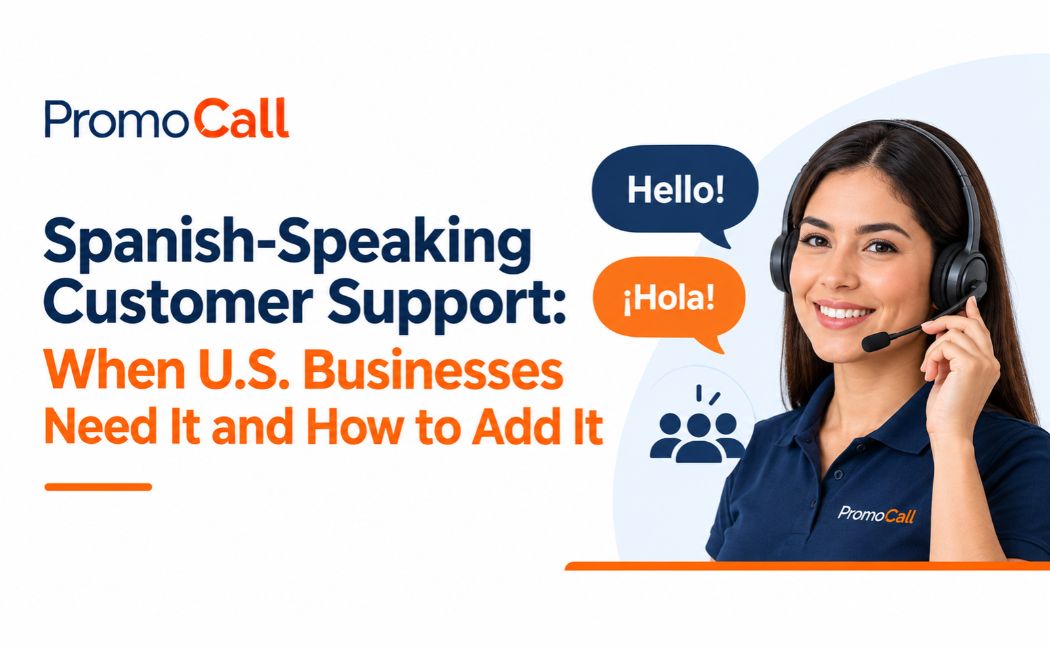
A team in Mexico where every agent speaks English and Spanish. Calls are answered in the customer’s language from the first word, with no transfer. For most growing businesses this is the fastest and most cost-effective option. See our bilingual English-Spanish call center services.
What good Spanish-language support looks like
- Native or near-native fluency in both languages, so agents can switch mid-call without effort
- Neutral, U.S.-friendly Spanish that customers from Mexico, Central America, the Caribbean and South America all understand
- Cultural understanding of U.S. customers and U.S. Hispanic customers, including how they expect to be addressed
- The same knowledge and tools as your English agents, not a reduced script
- Spanish across every channel: phone, email, chat and text
Tijuana is especially strong here. Many people live bilingual, bicultural lives across the San Diego border, as we explain in bilingual culture in Tijuana call centers.
Where Spanish support pays off most
- Healthcare: scheduling, insurance questions and billing, where misunderstandings are costly. See our healthcare call center.
- Finance: loan servicing, payments and account questions. See our financial services call center.
- Home services: emergency calls and job booking for plumbing, HVAC and electrical companies.
- Ecommerce: order questions, returns and delivery issues.
- Auto dealerships: sales and service appointments for Spanish-speaking buyers.
How to measure it
- Share of calls handled in Spanish
- First call resolution for Spanish vs English calls
- Customer satisfaction scores by language
- Conversion rate on Spanish-language sales calls
If Spanish callers resolve issues as quickly and buy at the same rate as English callers, the language gap is closed.
Related: learn more about Spanish-speaking call center staffing.
Frequently asked questions
Do we need a separate Spanish team?
No. A bilingual team handles both languages, which keeps staffing simpler and avoids transfers.
What about a Spanish phone menu?
Add a language option early in your IVR, or route by the number customers dial if you advertise separate lines.
How much does bilingual support cost?
Nearshore bilingual agents typically cost far less than bilingual hires in the U.S. Our Mexico call center cost guide covers typical rates.
Serve every customer in their language
PromoCall builds bilingual English-Spanish support teams in Tijuana for U.S. businesses, on U.S. time zones. Contact us for a quote within 24 hours.