Borrowers call their lender for the same handful of reasons: what do I owe, when is it due, can I change my payment date, how do I pay this off. Each call is simple on its own. Together they can bury a servicing team, especially around due dates. When borrowers wait on hold or cannot get through, payments arrive late, complaints rise and good customers start looking elsewhere.
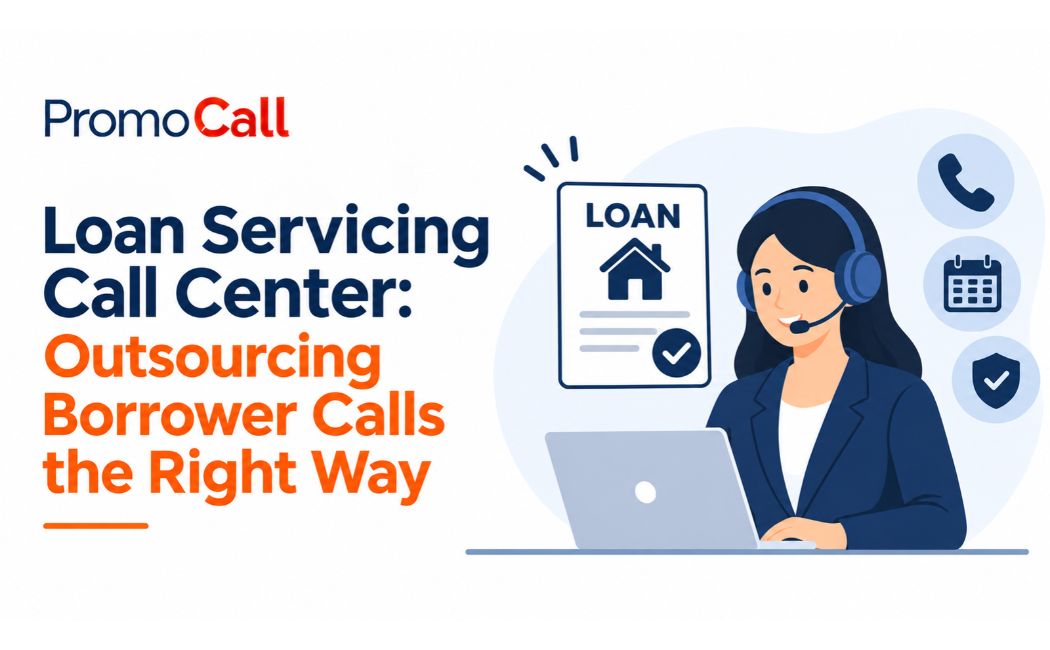
A loan servicing call center handles those borrower conversations for you. This guide covers what an outsourced servicing team does, the compliance questions to ask, and how lenders, credit unions and finance companies set one up.
What a loan servicing call center handles
Servicing calls are about keeping current accounts current. A trained team works inside your servicing platform, from your scripts, under your company name.
- Account questions: balance, next due date, payment history and escrow basics
- Payments: taking one-time payments through a secure process and setting up autopay
- Due-date and payment changes: processing requests within the rules you set
- Payoff requests: generating or sending payoff quotes your system produces
- Courtesy reminders: outbound calls and texts before a payment is due or just after it is missed
- Document help: walking borrowers through statements, tax forms and online account access
Early-stage outreach on a missed payment can sit with the servicing team. Accounts that are seriously delinquent usually move to a separate collections team with its own scripts and rules.
Who uses outsourced loan servicing support
- Consumer lenders and installment loan companies with seasonal peaks around due dates
- Auto and title lenders who need extended hours for working borrowers
- Credit unions that want members answered quickly without hiring more staff (see our guide to call center outsourcing for credit unions)
- Fintech lenders that need phone support alongside chat and email
Compliance: what to ask a servicing partner
Loan servicing is regulated, and you stay responsible for what a vendor says and does on your behalf. Before you sign, ask:
- How is borrower data protected? Financial institutions must safeguard customer information under the GLBA Safeguards Rule, and that duty extends to how you oversee service providers.
- How are outbound calls and texts consented and logged? The TCPA sets rules on autodialed calls and texts to mobile phones, so consent records matter.
- How are card payments handled? Look for a PCI DSS-aligned process that keeps card numbers out of call recordings.
- Are all calls recorded and QA scored? Recordings protect you in disputes and show how borrowers are treated.
- How are complaints captured? Agents should log complaints and route them to your compliance team the same day.
Mortgage servicers have extra requirements under RESPA and Regulation X, and delinquent accounts handled by third parties can fall under the FDCPA. Agree in writing which call types the partner handles and which stay in-house. Our guide to call center outsourcing for banking and financial services goes deeper on vendor due diligence.
Why lenders choose a nearshore team in Mexico
Same time zones as your borrowers
A team in Tijuana works on Pacific time and can cover U.S. business hours, evenings and weekends. Borrowers reach a person when they are free to call, not when an offshore shift happens to overlap.
English and Spanish on the same team
Many borrowers prefer to talk about money in Spanish. A bilingual call center handles both languages without transfers or interpreter lines.
Lower cost, without offshore trade-offs
Nearshore agents typically cost well below U.S. in-house staff once benefits, training and turnover are included. Our Mexico call center cost guide breaks down typical hourly rates.
Metrics to track
- Answer rate and average wait time during due-date peaks
- First call resolution for account and payment questions
- Payments taken on calls and autopay enrollments
- Roll rate from current to 30 days past due for accounts the team contacted
- QA and compliance scores from recorded calls
Our article on call center KPIs explains how to set targets for each.
How to get started
- List your call types and decide which stay in-house.
- Share scripts, policies and payment rules.
- Set up limited access to your servicing platform and payment system.
- Train, shadow and certify agents on your products and compliance rules.
- Launch with weekly reviews of recordings, metrics and complaints.
Frequently asked questions
Is loan servicing the same as collections?
No. Servicing supports current borrowers with payments and account questions. Collections works seriously delinquent accounts and follows stricter rules. Many lenders outsource servicing first and keep collections separate.
Can an outsourced team take loan payments?
Yes, through a secure payment process that keeps card and bank details out of recordings and limits what agents can see.
Do we keep control of our borrowers?
Yes. Agents work in your systems, follow your scripts and escalate exceptions to your staff. You own the borrower relationship and the data.
How fast can a servicing team go live?
A small team can usually be trained and live within a few weeks, depending on system access and compliance review.
See how it would work for your portfolio
PromoCall’s financial services call center in Tijuana supports U.S. lenders with bilingual servicing and early-stage outreach. Contact us for a quote within 24 hours.