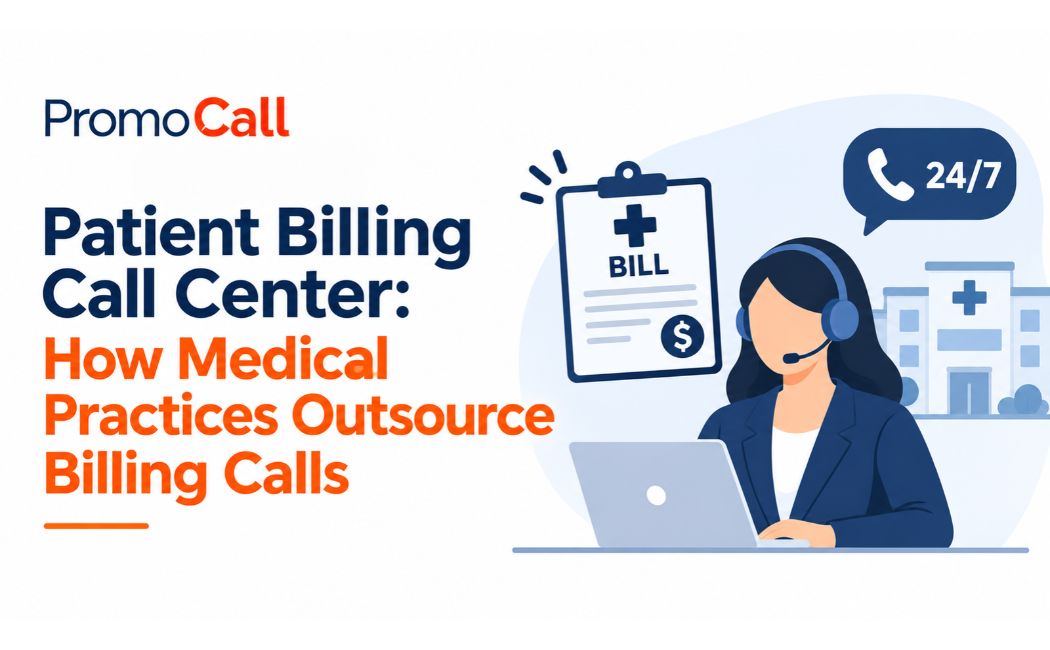
Billing calls are some of the hardest calls a medical practice handles. Patients are confused by a statement, worried about a balance, or surprised that insurance paid less than expected. These calls take time, they need patience, and they land on the same front-desk team that is trying to check patients in. When billing calls go to voicemail, balances age, patients get frustrated and collections get harder.
A patient billing call center takes those calls off your front desk. This guide explains what an outsourced billing team handles, what it should not handle, how to keep it compliant, and how to tell whether your practice is ready.
What a patient billing call center does
A billing call center is a trained team that answers and makes patient financial calls on behalf of your practice or billing company. Agents work from your scripts and your billing system, under your name.
- Statement questions: explaining charges, dates of service, adjustments and what insurance paid
- Balance and payment calls: confirming balances, taking card payments through a secure process, and sending payment links
- Payment plans: setting up plans inside the rules you define
- Insurance follow-up: updating patient insurance details and flagging claims that need resubmission
- Self-pay estimates: walking self-pay patients through cost estimates your practice provides
- Outbound reminders: courtesy calls on open balances before they move to collections
The goal is simple: every billing call gets answered by someone who can actually help, and your in-house staff spend their time on patients in the building.
What should stay with your team
Outsourcing works best when the boundaries are clear. Most practices keep these decisions in-house:
- Write-offs, hardship discounts and settlements above a set amount
- Disputes that need clinical input from a provider
- Decisions to send an account to an outside collection agency
- Coding and claim appeals that need a certified coder
A good partner builds an escalation path for each of these so the patient gets a clear next step instead of another transfer.
Why practices outsource billing calls
Calls get answered when patients call
Patients usually call about a bill in the evening or on a lunch break. A dedicated team can cover extended hours, so fewer calls end in voicemail and fewer balances sit unpaid while a message waits to be returned.
Spanish-speaking patients get help in Spanish
Billing is already confusing in a patient’s first language. A bilingual English-Spanish team lets Spanish-speaking patients understand their bill and agree a plan without a second call or an interpreter line.
Front-desk staff stop juggling two jobs
When billing calls leave the front desk, check-in moves faster and staff turnover pressure eases. Your team can focus on scheduling, intake and the patients in front of them.
Lower cost than hiring locally
A nearshore team in Mexico typically costs well below a U.S. in-house hire once salary, benefits, training and turnover are counted. See our guide to call center outsourcing costs in Mexico for typical rate ranges.
Compliance: what to ask before you sign
Billing calls involve protected health information and often card payments, so compliance is not optional. Ask any partner:
- Will you sign a Business Associate Agreement (BAA)? HIPAA requires one for any vendor that handles PHI on your behalf.
- How do agents verify identity? Agents should confirm the caller is the patient or an authorized person before discussing an account.
- How are card payments taken? Look for a PCI DSS-aligned process, such as secure payment links or pause-and-resume recording, so card numbers are not stored in call recordings.
- Who can see what? Access to your billing system should be limited to the screens agents need.
- How are calls monitored? Recorded calls and regular QA scoring show you how patients are treated.
Self-pay patients also have rights to a good faith estimate under the No Surprises Act, so make sure agents know where your estimates come from and how to escalate questions. Our article on SOC 2, PCI and HIPAA compliance covers what each standard means for a call center partner.
How to launch a billing call team
- Map your call types. List the billing questions you get each week and which ones need escalation.
- Write scripts and rules. Set payment plan limits, approved wording for balances and escalation paths.
- Set up secure access. Create limited logins to your billing or practice management system.
- Train and shadow. Agents learn your statements and policies, then listen to live calls before taking them.
- Go live and review weekly. Track answer rate, payments collected on calls and escalations, and adjust scripts.
Most practices can move from kickoff to live calls in a few weeks. Our first 90 days guide shows what each stage looks like.
Is your practice ready?
Outsourcing billing calls usually makes sense when one or more of these is true:
- Billing voicemails are returned a day or more later
- Front-desk staff handle billing questions between check-ins
- You serve a large Spanish-speaking patient base
- Patient balances are growing faster than your team can follow up
If that sounds familiar, PromoCall’s healthcare call center in Tijuana, Mexico supports U.S. practices with bilingual patient scheduling, insurance verification and billing calls on U.S. time zones.
Frequently asked questions
Can a call center take patient payments over the phone?
Yes, if the process is designed for it. Secure payment links or a payment system that keeps card numbers out of recordings let agents take payments without storing card data.
Is outsourcing billing calls HIPAA compliant?
It can be. HIPAA allows vendors to handle PHI for payment purposes when a Business Associate Agreement is in place and the vendor applies the required safeguards.
Will patients know they are talking to an outside team?
Agents answer in your practice’s name and follow your scripts. Many practices tell patients that a billing support team handles their call, which is also a good transparency practice.
What is the difference between billing support and collections?
Billing support helps patients understand and pay current balances. Collections deals with overdue accounts and has its own rules. Many practices start with billing support and keep collections separate.
Talk to us about your billing calls
Want to see what a bilingual billing team would look like for your practice? Contact PromoCall for a quote within 24 hours.