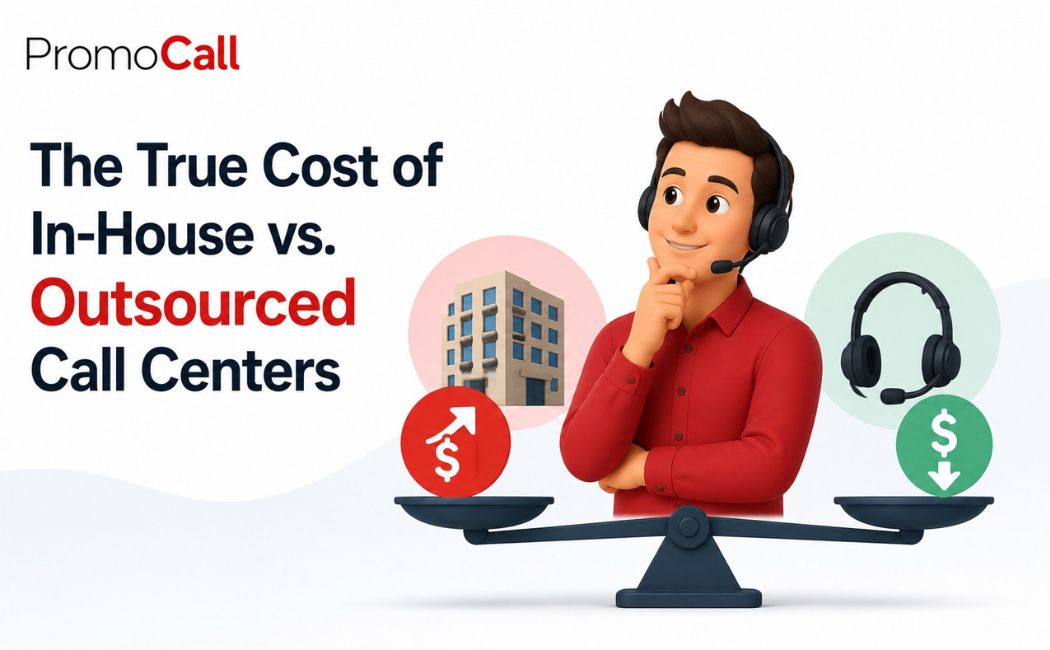
For many businesses, managing customer communication becomes more expensive over time.
As call volume increases, companies face a critical decision:
👉 Build an in-house call center
👉 Or outsource operations
At first glance, the answer seems simple.
But the real cost goes far beyond salaries.
Understanding the Real Cost of In-House Call Centers
Running an in-house call center involves much more than hiring agents.
Businesses must also manage:
- Office space
- Equipment and infrastructure
- Recruiting and training
- Payroll and HR
- Ongoing management
These operational expenses add up quickly.
👉 Especially as teams begin to scale
Labor Costs Continue to Rise
One of the largest expenses is staffing.
In-house teams require:
- Competitive salaries
- Benefits and insurance
- Paid training
- Employee retention efforts
As turnover increases, hiring costs also increase.
👉 This creates long-term operational pressure
Infrastructure Is More Expensive Than Most Companies Expect
Setting up a call center requires:
- Telecom systems
- Workstations
- Software platforms
- Internet and security systems
For growing companies:
👉 Infrastructure alone can become a major investment
Reduce Operational Costs Without Losing Control
Build a structured nearshore call center with scalable infrastructure and bilingual support.
✔ Lower operating costs
✔ Operational flexibility
✔ Scalable teams
👉 Learn more about call center services Mexico
The Scalability Problem with In-House Teams
Scaling internally is often slow and expensive.
Businesses must:
- Hire additional staff
- Expand office capacity
- Train new employees
- Increase operational management
This creates delays during growth periods.
👉 Especially when call volume changes quickly
How Outsourced Call Centers Reduce Costs
Outsourced and nearshore models help businesses reduce expenses by providing:
- Existing infrastructure
- Operational support
- Access to trained talent
- Flexible scalability
👉 This is why many businesses explore call center outsourcing Mexico
Nearshore vs Traditional Outsourcing
Not all outsourcing models are the same.
Traditional offshore outsourcing may reduce costs, but businesses often struggle with:
- Communication gaps
- Time zone differences
- Limited operational visibility
Nearshore models offer:
- Better alignment with U.S. business hours
- Easier collaboration
- Bilingual support
👉 This is one reason companies choose nearshore call center Mexico
Maintaining Control While Reducing Costs
One concern businesses have is losing operational control.
Modern nearshore setups allow companies to:
- Manage workflows directly
- Monitor team performance
- Maintain communication standards
👉 This creates a balance between efficiency and oversight
Comparing Long-Term Operational Costs
Over time, in-house operations often become harder to manage due to:
- Increasing labor costs
- Infrastructure maintenance
- Recruiting challenges
- Employee turnover
Nearshore support models help businesses:
👉 Scale more efficiently while controlling expenses
When Businesses Typically Explore Outsourcing
Companies usually consider outsourcing when:
- Operational costs continue rising
- Internal teams become overwhelmed
- Scaling becomes difficult
These are signs the current setup may not be sustainable.
What to Look for in a Nearshore Call Center Partner
When evaluating solutions, businesses should consider:
- Infrastructure support
- Scalability
- Bilingual capabilities
- Operational transparency
👉 Many companies rely on call center in Mexico for structured operational support
Looking for a More Cost-Efficient Call Center Model?
Explore how nearshore call center solutions can help reduce operational costs while maintaining control over your operations.
👉 Learn how nearshore call center Mexico can support your business growth